A Complete List Of Indy 500 Races Impacted By Rain - Page 4
A Complete List Of Indy 500 Races Impacted By Rain
The Indianapolis 500 is built on speed, nerve, and tradition, but weather has shaped the race almost as often as the drivers themselves.
Over more than a century, rain has delayed starts, pushed the event into later days, and even ended the race before the full 500 miles were complete.
Here is a chronological look at the Indy 500 years most affected by rain, using the key moments from each race and the historical context that shows just how often weather has changed the script at Indianapolis.
RELATED | Photos Of Indy 500 Winners Drinking Milk And Why They Do It
RELATED | 10 Fun Facts On The Indy 500
2025: A 47-minute delay to start
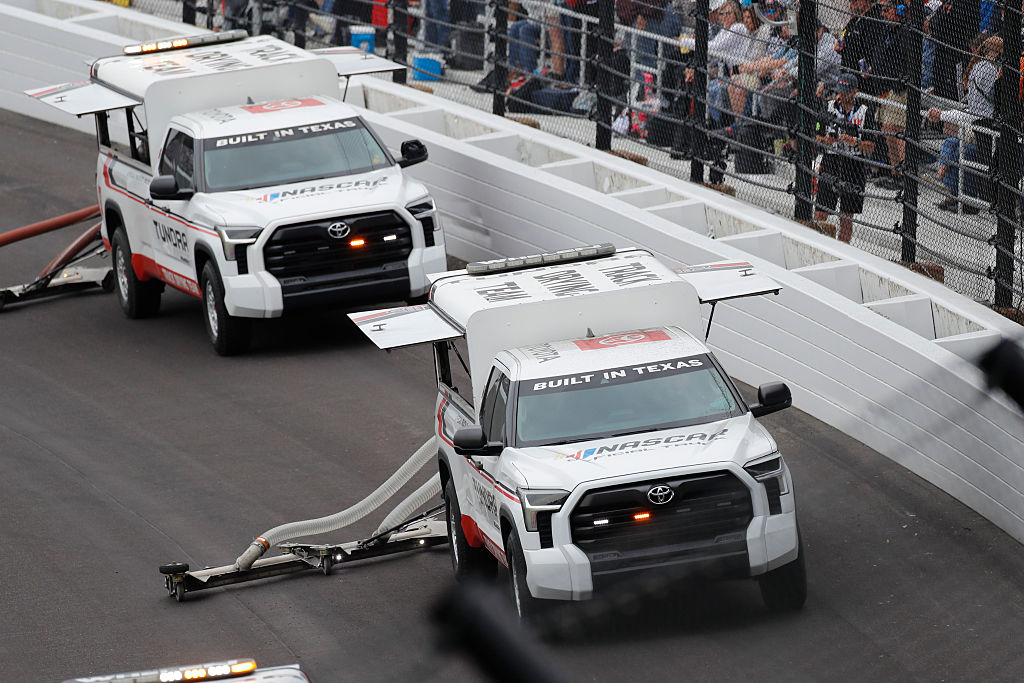
In 2025, light mist and damp spots during pre-race ceremonies forced officials to put the start on hold. The delay came at approximately 12:40 p.m., after “Back Home Again in Indiana,” with drivers told to remain in their cars while track-drying equipment was deployed.
The command to start engines, originally set for 12:38 p.m., finally came at 1:24 p.m. The race began around 1:32 p.m., 47 minutes behind schedule. A crash by Scott McLaughlin on the final pace lap added another wrinkle to the opening moments, and an early caution for light sprinkles followed, but the weather did not significantly affect the race after that.
2024: A four-hour delay before a full-distance finish
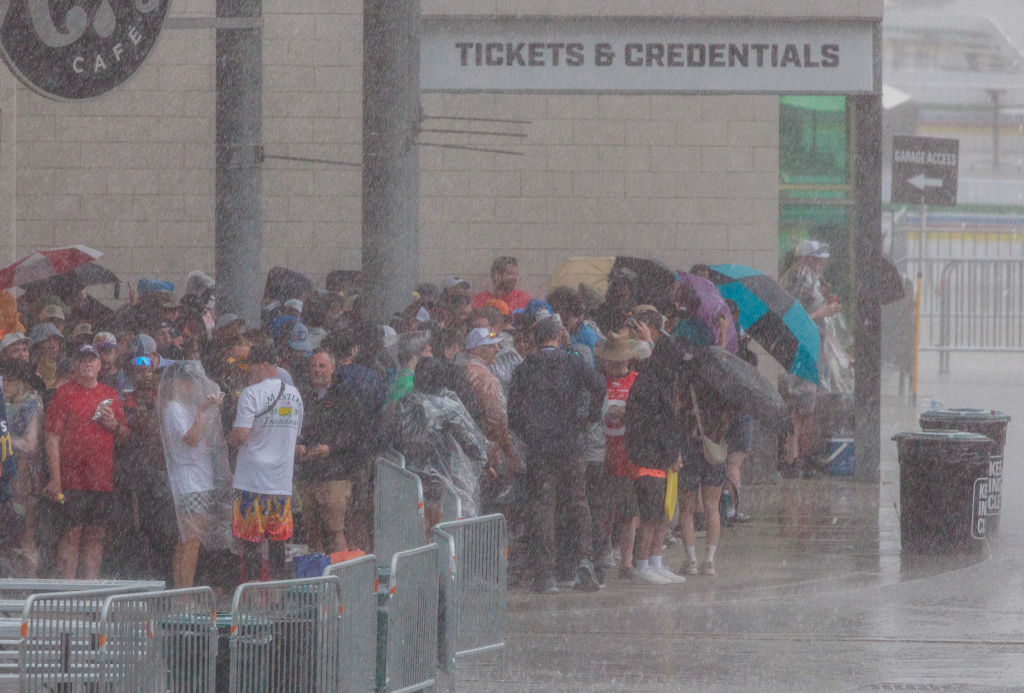
The 2024 Indianapolis 500 brought a modern version of an old problem. Fans entered the Speedway under decent skies, but storms moved toward the track late in the morning. Pre-race activities were halted at 11:17 a.m., and spectators were asked to leave the grandstands because of nearby lightning.
A heavy thunderstorm hit around 12:30 p.m. and lasted roughly an hour and a half. Once conditions improved, the Speedway reopened the stands, track drying began, and officials worked through a revised timeline shaped by both sunset and safety concerns.
The race finally started at 4:44 p.m., roughly four hours later than planned, and it ended at about 7:45 p.m. without further interruption. Even in an era of advanced forecasting and drying equipment, the Speedway was still at the mercy of Indiana weather.
2007: Stopped twice and shortened again
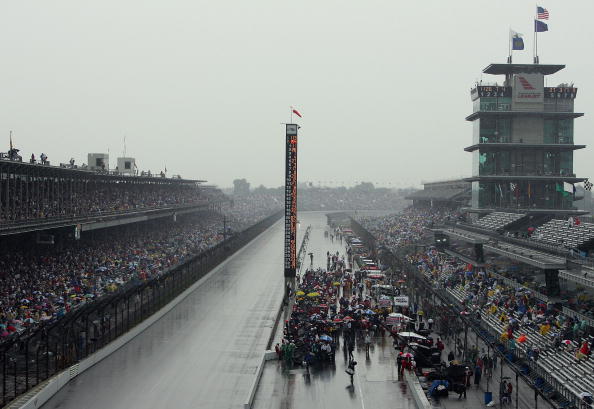
The 2007 Indianapolis 500 started on time despite overnight and morning rain in the area. But once the race was underway, weather took over.



Rain fell before a cleanup could be completed after a crash, and the race was red-flagged with 113 laps complete. The delay lasted 2 hours and 57 minutes before the field returned to the track. Racing resumed, but rain threatened again later in the afternoon.
After another incident brought out yellow on lap 163, the skies opened up once more. Officials declared the race over after 166 laps, or 415 miles. Dario Franchitti was the winner, collecting his first Indianapolis 500 in one of the wettest races the event has seen.
2004: One of the most weather-beaten races ever
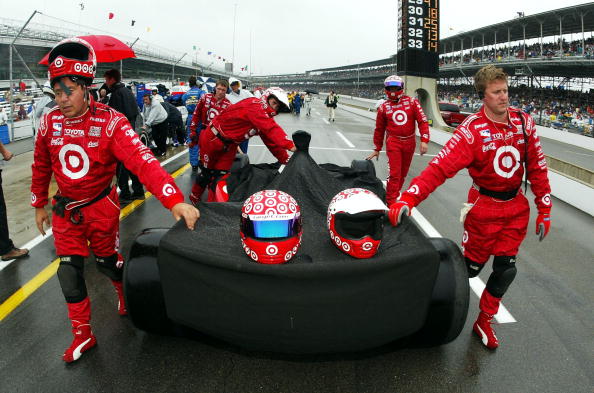
If any single Indy 500 can challenge 1973 for weather chaos, it is 2004. Rain started early in the day and kept the race from beginning until 1:10 p.m.
Then the interruptions continued. A light rain on lap 22 brought out a yellow and then a red flag, stopping the race while the track was dried. Competition resumed at 3:30 p.m., but more rain later entered the picture. On lap 174, another shower brought out yellow again, and after 180 laps the race was ended early.
That left the event 20 laps short of the full distance. As if that was not enough, a severe storm moved into the area, and an F2 tornado touched down only a few miles south of the Speedway. Few races in Indy 500 history have been hit by weather on so many levels in a single day.
2001: A mid-race red flag
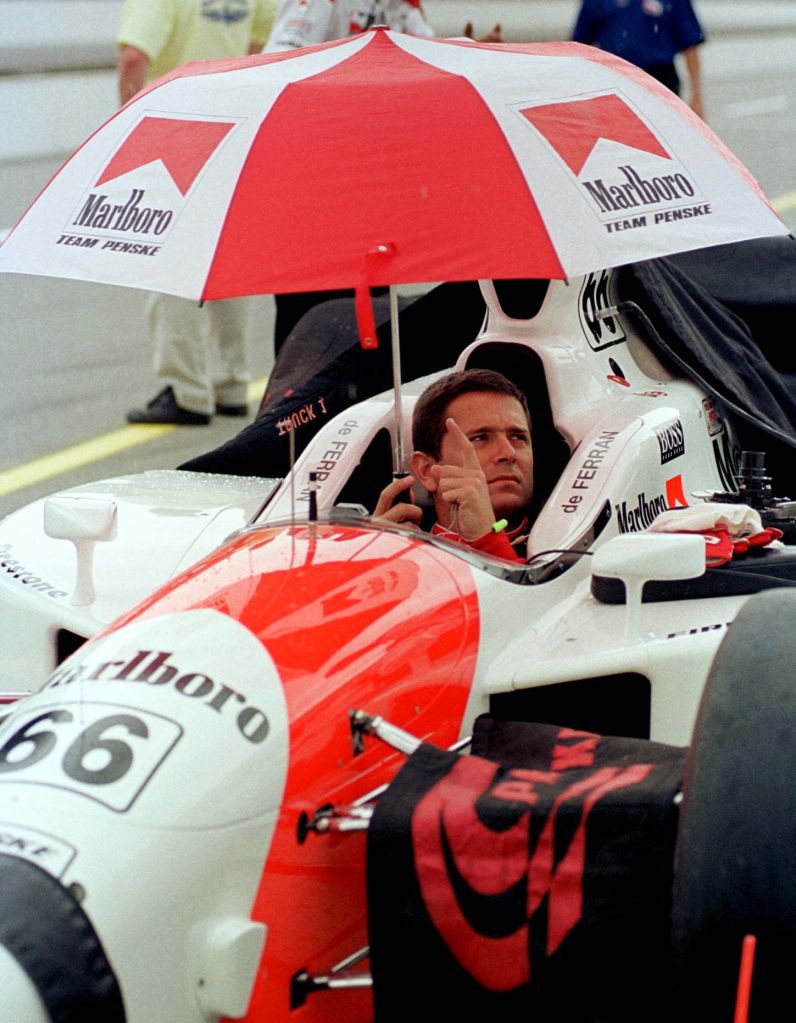
The 2001 race started on time, but weather interrupted it later. Light rain around the halfway point produced a yellow-flag stretch, and then rain returned more seriously on lap 155.
Officials stopped the race with a red flag, and after about a 17-minute delay, the event resumed. Hélio Castroneves went on to finish the job and score the first of his four Indianapolis 500 victories. It was a shorter interruption than some years, but an important correction from rougher accounts that put the delay at 16 minutes.
2000: More than three hours late
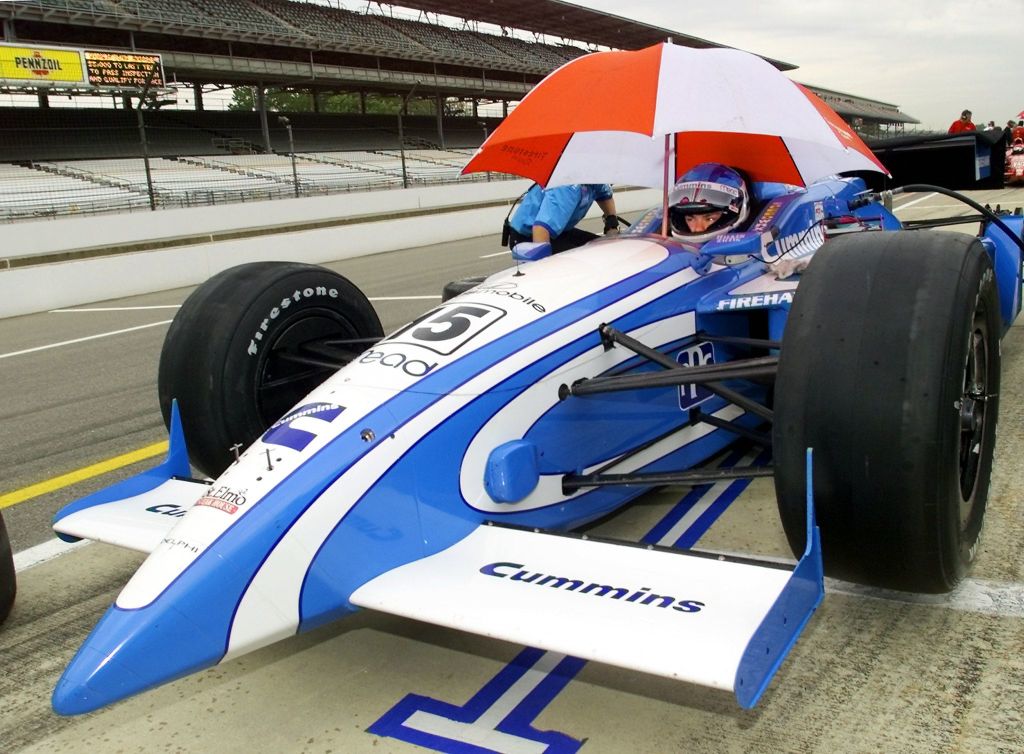
The 2000 Indianapolis 500 saw one of the longest race-day start delays in event history. Rain began falling shortly after cars were placed on the starting grid in the morning, sending them back to the garage.
Track drying began, then stopped when rain returned again before noon. Once the second shower finally passed, workers got the Speedway ready in time for a much later start. The command to start engines came at 2:01 p.m., making the total delay 3 hours and 10 minutes.
Even then, the weather was not completely finished. Rain fell again just minutes after the checkered flag.
1998: A 35-minute delay and an odd sideshow
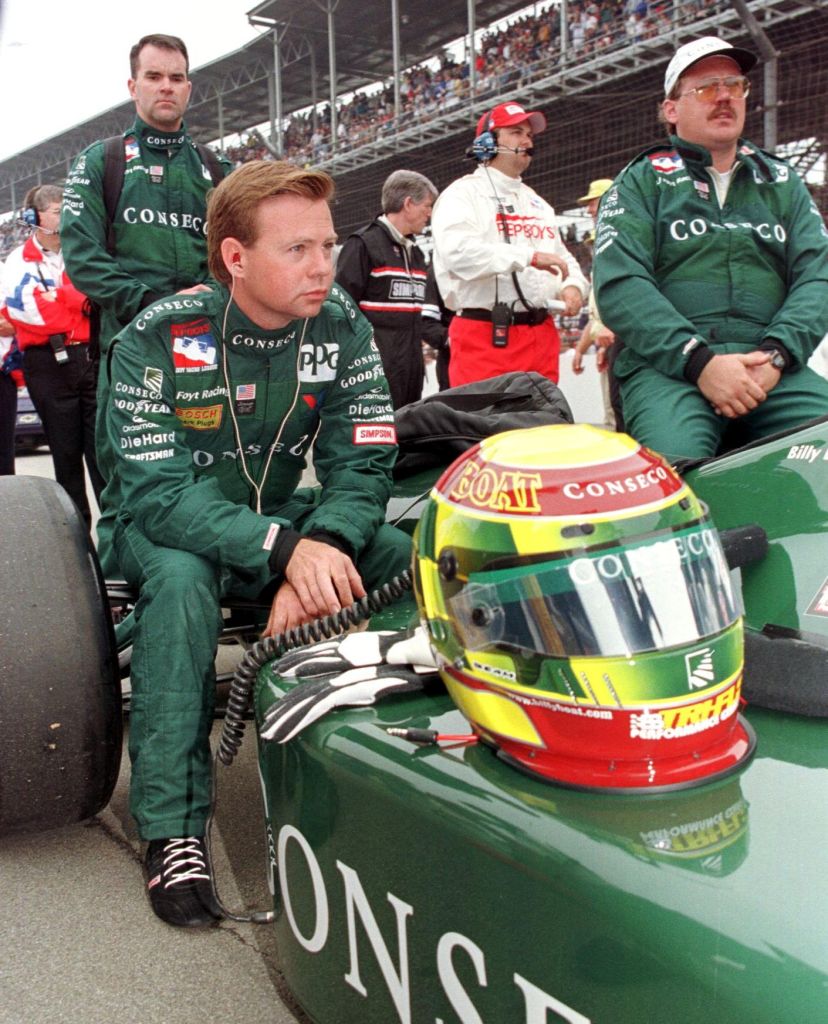
The 1998 race was delayed by 35 minutes due to morning rain. Once the track was being dried, fans got an unexpected bit of entertainment when a stray dog ran loose on the Speedway and dodged safety workers.
After that unusual scene, the race itself ran to completion without further weather trouble. It was a lighter footnote in Indy’s rain history, but still a memorable one.
1997: Postponed, stopped, and resumed over three days
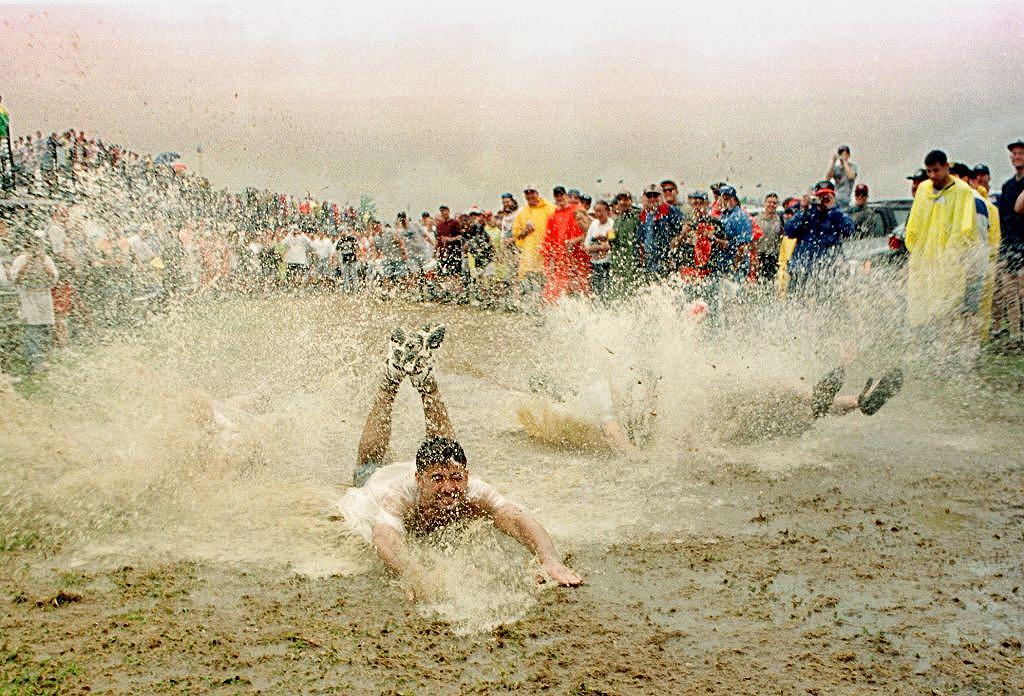
The 1997 Indianapolis 500 became another multi-day weather saga. Morning rain delayed the start on Sunday, May 25. Cars were on the grid late in the morning, but heavy rain fell again just before noon, and officials postponed the race to Monday.
The race did start Monday at 11:00 a.m., but rain halted it after only 15 laps. Since the race was still well short of the official distance threshold, it could not yet be declared complete. Officials then made the decision to resume on Tuesday.
Under sunny skies Tuesday, the race restarted at lap 16 and was completed. That made 1997 one of the rare Indy 500s to be stretched across three calendar days by rain.
1996: A few minutes and a moment of confusion
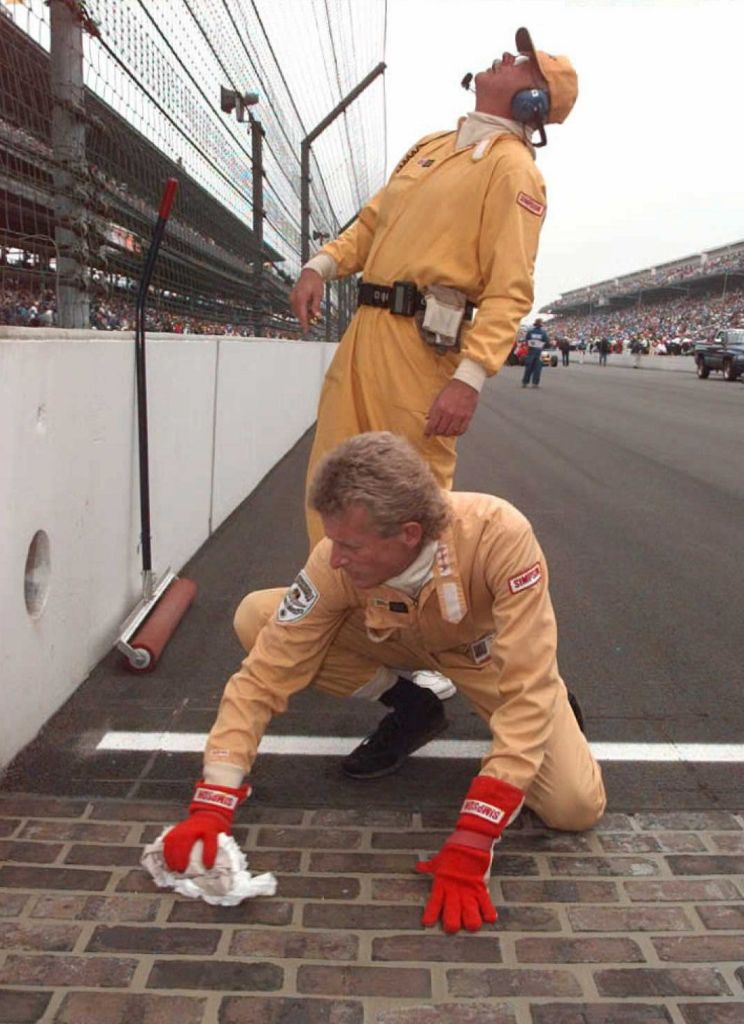
The 1996 race was delayed only by a few minutes because of morning rain. Like 1995, it was more of a brief inconvenience than a major stoppage.
One unusual detail made it memorable. After the command to start engines, officials briefly shut the engines back off when it appeared rain might be returning. Within moments, they reversed course, engines were re-fired, and the field rolled away. The race then ran to completion without any further weather delay.
1995: Only a brief delay
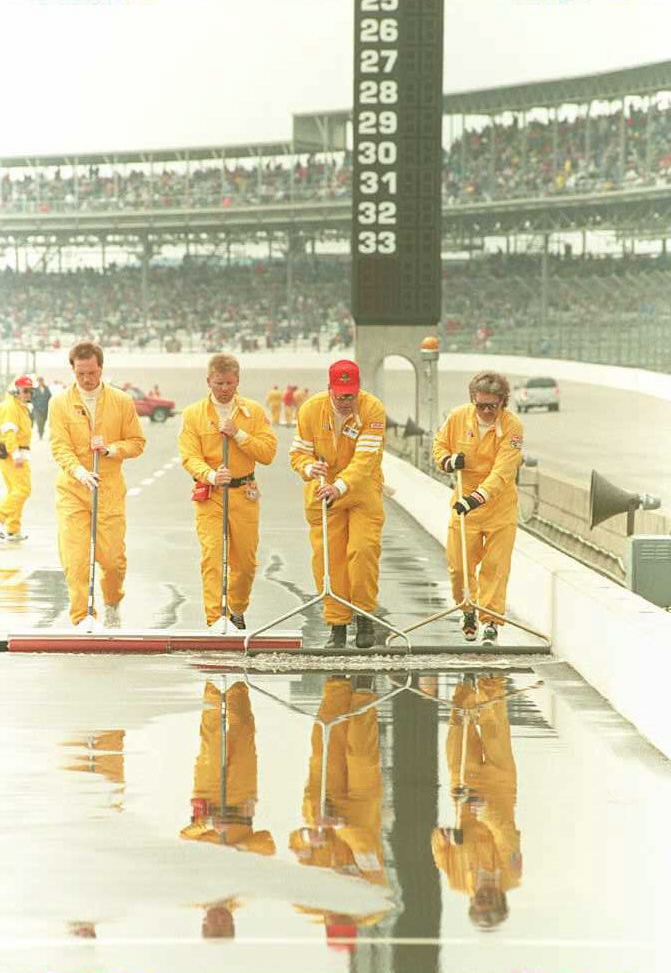
Rain fell overnight and into race morning in 1995, but conditions improved quickly enough that most pre-race ceremonies stayed on time.
The start itself was delayed by less than five minutes. In the long history of Indy weather issues, 1995 barely qualifies as a disruption, but it still belongs on the timeline as one of those years when the Speedway escaped bigger trouble by a narrow margin.
1991: A 55-minute wait
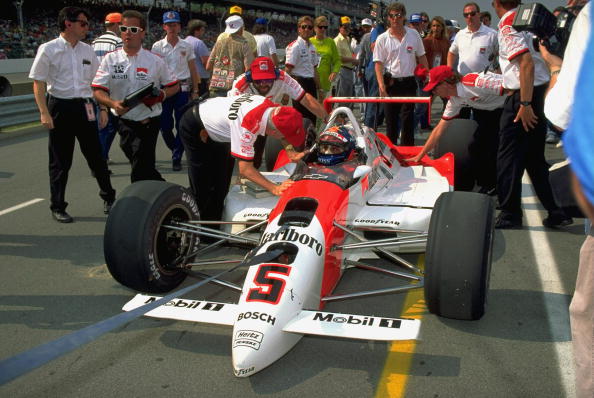
Morning rain delayed the 1991 race by about 55 minutes. Once the track was dried, the Indy 500 proceeded without another weather interruption.
Compared with some of the more dramatic years on this list, 1991 was relatively minor. Still, it was another reminder that even when the race stays on its scheduled day, rain can reshape the rhythm of the morning and the buildup to the start.
1986: A race pushed all the way to the following Saturday
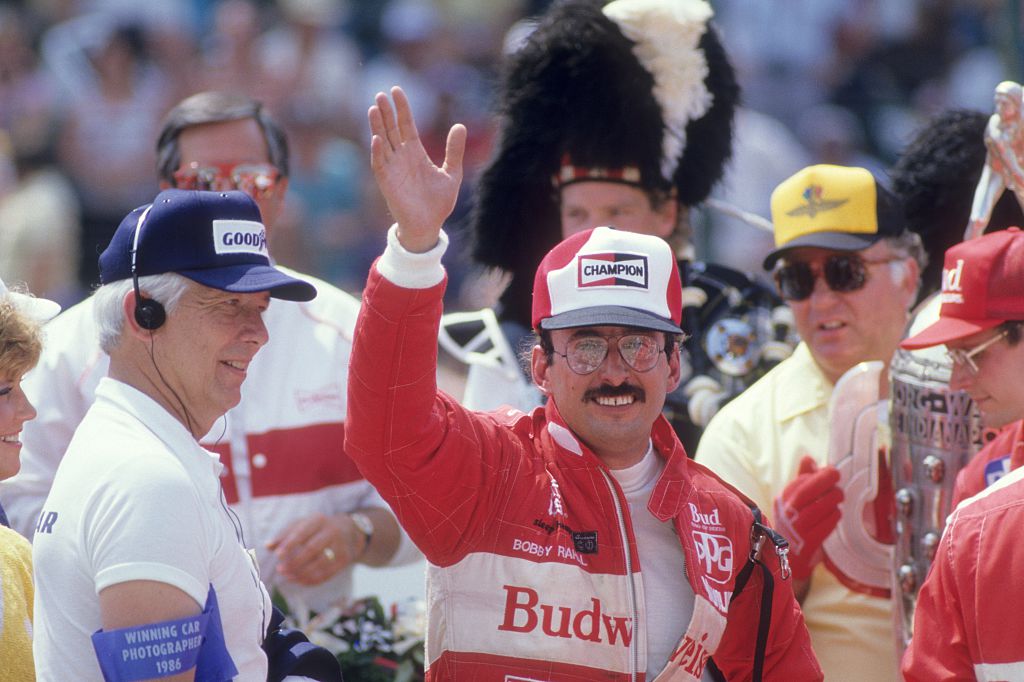
The 1986 Indianapolis 500 had one of the strangest weather timelines in race history. The race was scheduled for Sunday, May 25, but rain throughout the day prevented any start. Officials finally postponed the event to Monday.
Monday brought more steady rain, washing out that day as well. With another uncertain forecast and major concerns about staging the race on a weekday in front of sparse stands and without live network coverage, officials made an unusual decision: postpone the race all the way to Saturday, May 31.
When race day finally arrived under sunny skies, there was still one more delay. Tom Sneva crashed on the final pace lap, which pushed the start back another 35 minutes. Even so, the central weather story of 1986 was that rain forced the Indianapolis 500 off Memorial Day weekend entirely, a first for the event.
1976: The shortest rain-shortened 500 of all
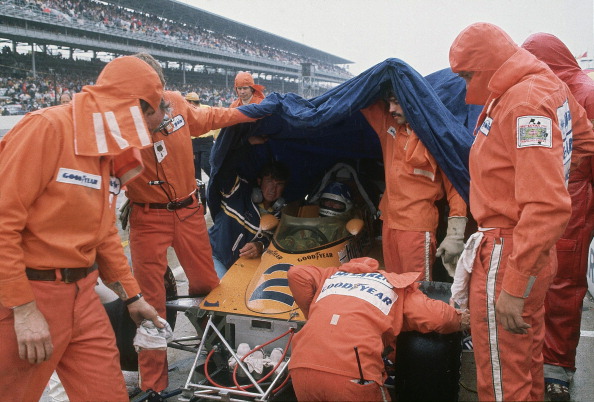
If 1950 had once been the shortest completed Indy 500, 1976 took that distinction away. Light drizzle appeared around lap 100, then intensified quickly.
The red flag came out on lap 103, but officials waited to see if the track could be dried and the race resumed. Since the event had passed the point needed to become official, there was no urgency to restart if the weather would not cooperate. The track nearly returned to race-ready condition later in the afternoon, but more rain arrived before competition could resume.
The race was officially called back to the completion of lap 102, for a total of 255 miles. Johnny Rutherford was declared the winner. It remains the shortest Indianapolis 500 on record.
1975: Ended in a downpour
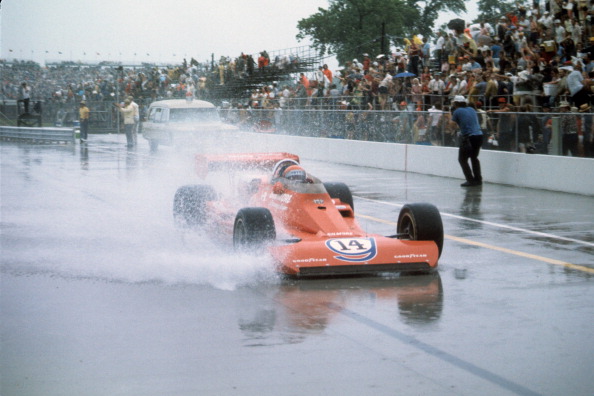
Rain cut short the 1975 Indianapolis 500 on lap 174. Skies had looked threatening for several laps, and while the field was already under caution for debris from Gary Bettenhausen’s car, the weather turned worse in a hurry.
Before the race could return to green, a sudden downpour soaked the Speedway. Bobby Unser carefully brought his car around to the finish as the red and checkered flags were displayed together. He was declared the winner after 174 laps, making it another rain-shortened Indy 500.
1973: One of the most weather-marred races in Indy history
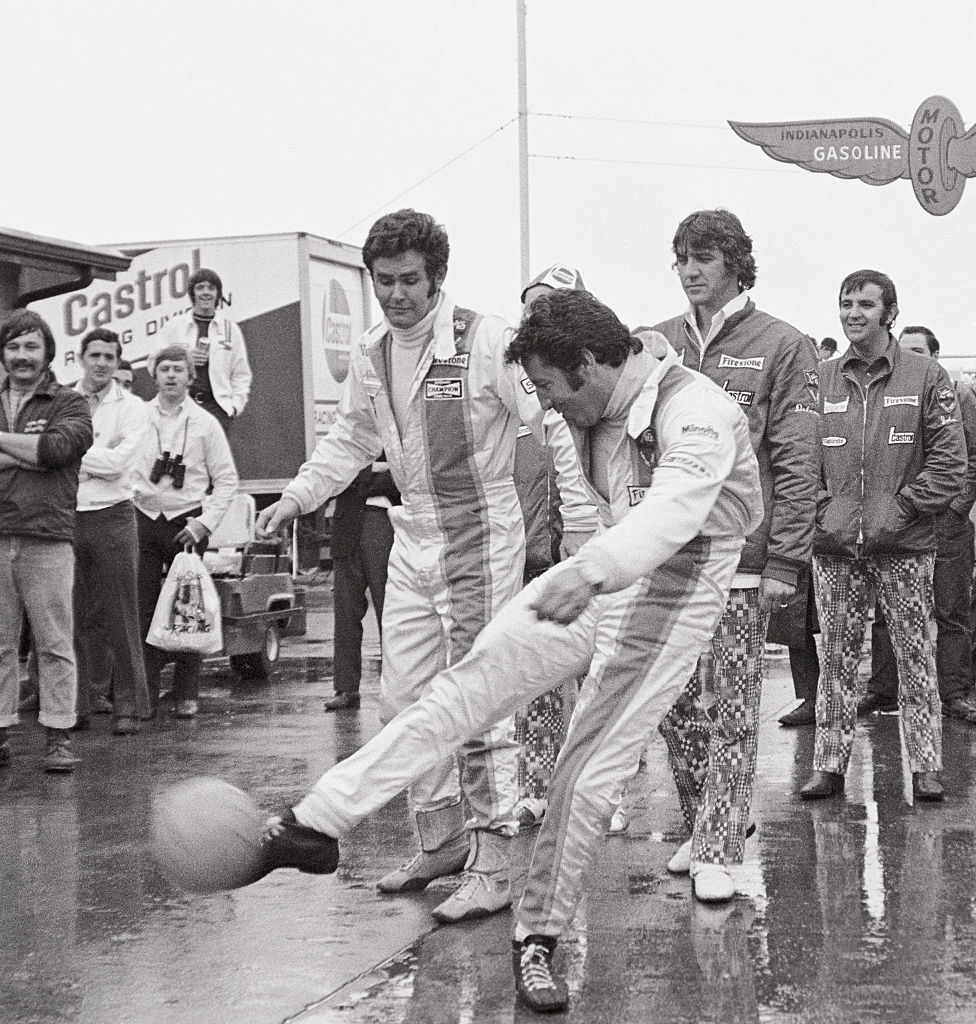
Few Indianapolis 500s were hit by weather more severely than the 1973 race. It was originally scheduled for Monday, May 28, but morning rain delayed the start until 3:06 p.m.
When the race finally started, a massive first-lap crash involving Salt Walther and several other cars brought an immediate red flag. The crash injured Walther and 11 spectators after debris and burning fuel reached the grandstand. Before the race could be restarted, rain returned and forced a postponement to Tuesday.
Tuesday brought more trouble. Rain delayed another start attempt until 10:08 a.m., but rain fell again during the parade lap and washed out the day.
The race finally got underway on Wednesday, May 30, after yet another weather delay. It began at 2:10 p.m., was later red-flagged for Swede Savage’s horrific crash, and then faced rain again late in the event. After 133 laps, with Gordon Johncock leading, officials declared the race complete. The final distance was 332.5 miles.
The 1973 race remains one of the most tragic and chaotic editions of the event, and the weather was a major reason it stretched across three days.
1970: Morning rain and a delayed beginning
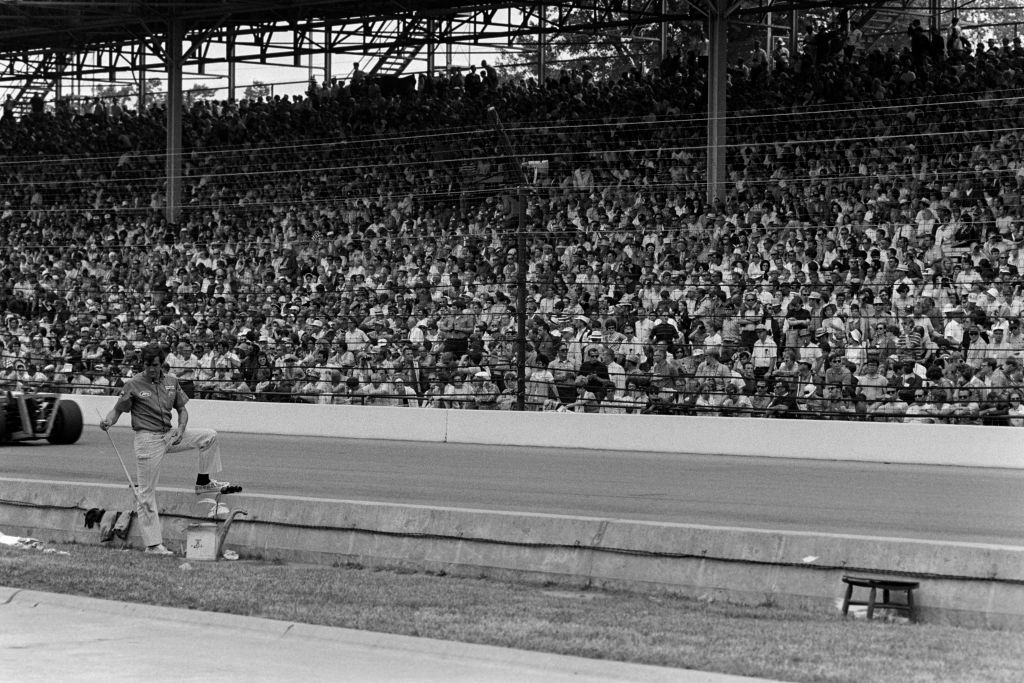
In 1970, the Indy 500 was scheduled for a noon start, a one-time change from the usual 11:00 a.m. tradition of that era. Morning rain delayed the start by about 25 minutes.
The weather delay was only part of the story. On the final pace lap, Jim Malloy crashed after a suspension failure, creating another delay of roughly half an hour before the race could actually begin. The rain was the first hurdle, even if it was not the last.
1967: The first race resumed on a second day
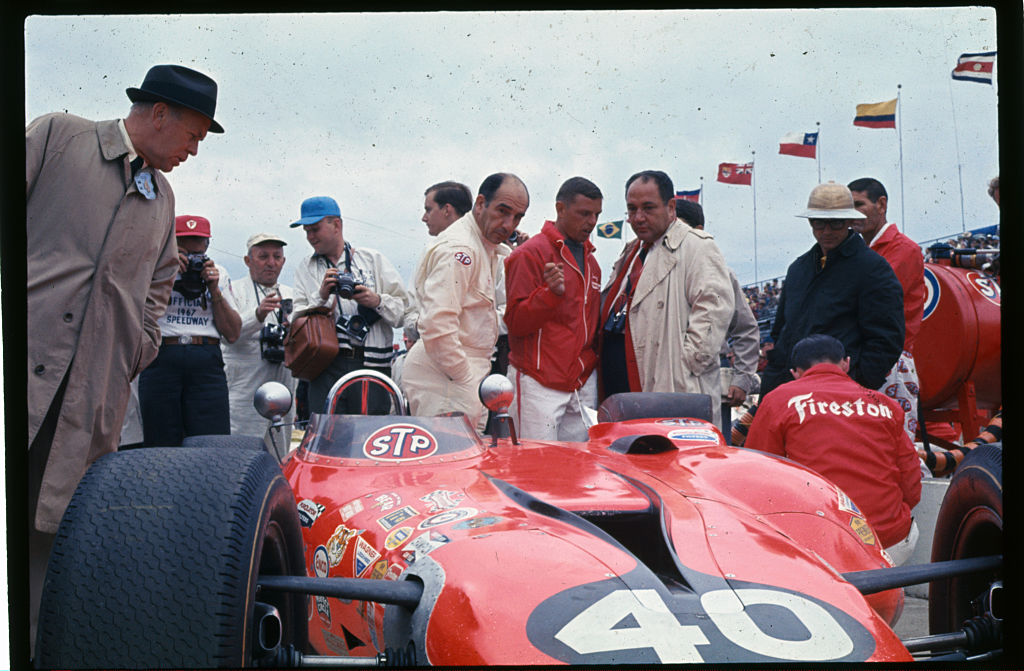
The 1967 Indianapolis 500 introduced another first. The race started on time on Tuesday, May 30, but rain began falling after only 18 laps.
Officials red-flagged the event, and continued rain made it impossible to restart that day. For the first time in race history, the Indy 500 was carried over and resumed on a second day. Racing restarted on Wednesday morning at lap 19, and A.J. Foyt went on to win his third Indianapolis 500.
That moment set an important precedent. From then on, a race interrupted by weather no longer had to be treated as a same-day problem.
1950: Ended after 138 laps
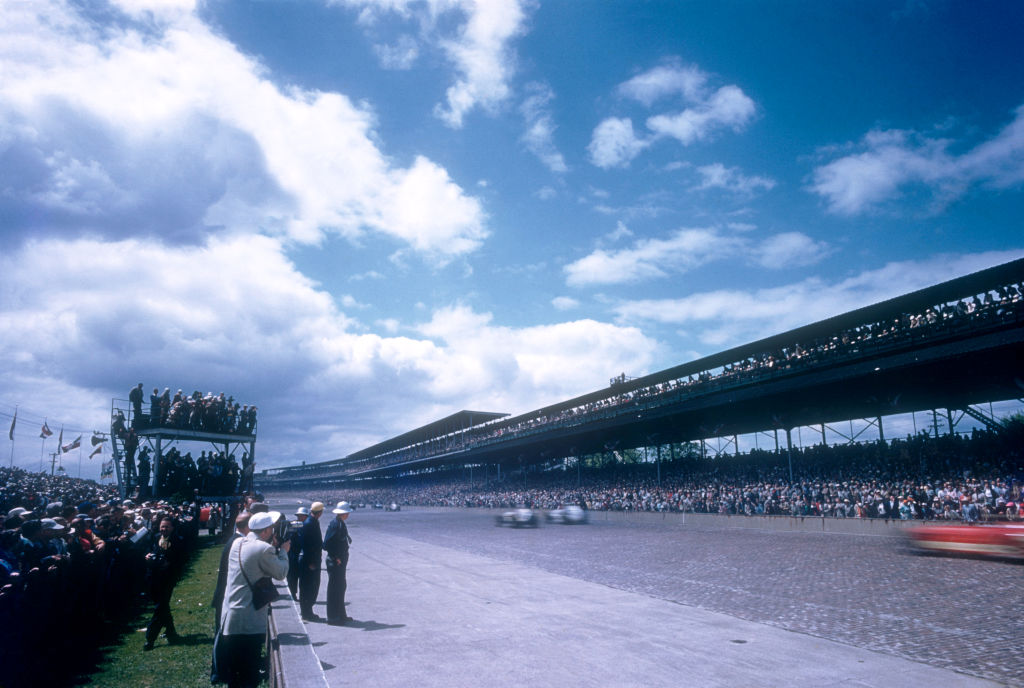
Rain again shortened the Indy 500 in 1950. A sudden downpour hit on lap 135 with Johnnie Parsons in the lead, bringing out the caution.
After three laps behind yellow, officials decided conditions were not going to improve enough to continue. The race was stopped and declared official at 138 laps, or 345 miles, with Parsons named the winner. At the time, it was the shortest Indianapolis 500 ever completed.
1940: The final 50 laps under caution
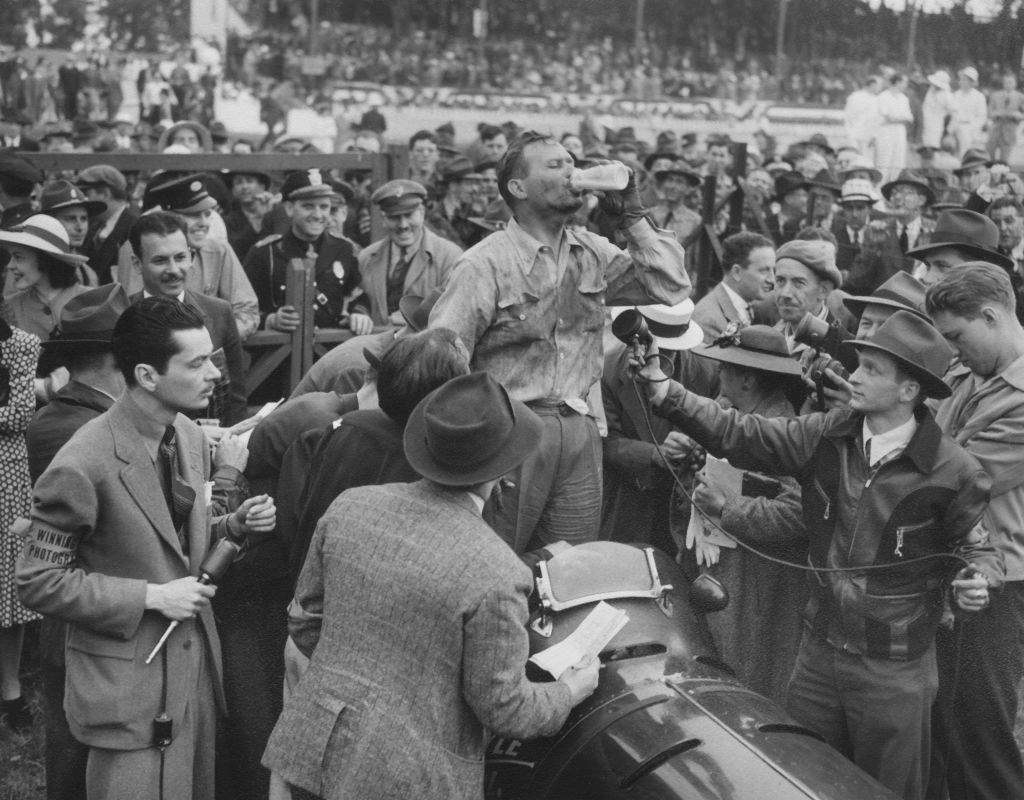
The 1940 race was not stopped by rain, but it was heavily shaped by it. Rain began falling on lap 150, and instead of halting the event, officials kept the race going under caution.
The final 50 laps were run with drivers slowed and locked into position. That meant more than an hour of cautious running to the finish. Wilbur Shaw stayed in front and claimed his second straight Indianapolis 500 victory. The result is often remembered for Shaw’s win, but the weather was the defining factor in how the race ended.
1931: A two-hour delayed start
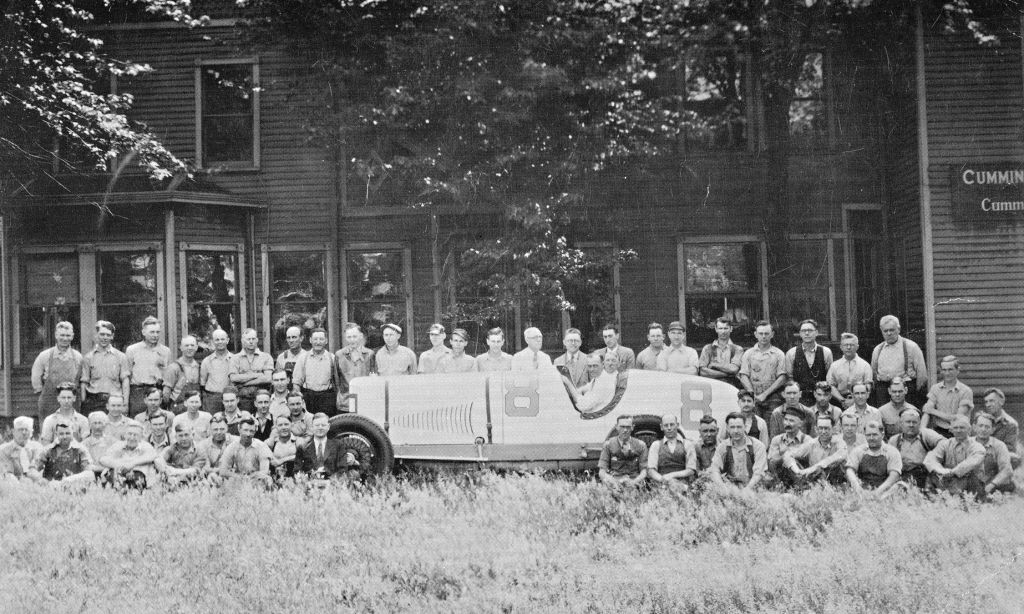
Rain delayed the 1931 Indianapolis 500 before the green flag ever flew. The race had been scheduled to start at 10:00 a.m. on Saturday, May 30, but wet conditions pushed the start back by two hours.
The race finally began at noon. Even with off-and-on showers during the first half, the event was run to completion. It was an early example of a familiar Indy pattern: a soaked morning followed by a race that still found a way to finish on the same day.
1926: The first rain-shortened Indy 500
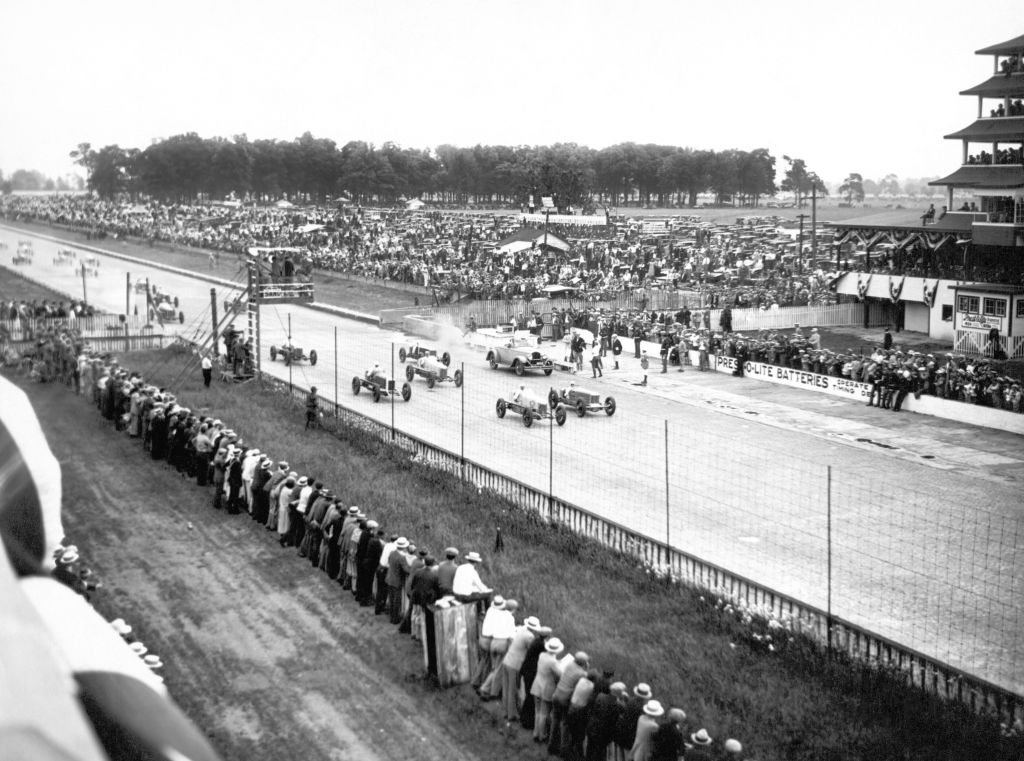
The 1926 race made history in a different way. Rain stopped the event twice, and it became the first Indianapolis 500 to be officially ended before the full 500 miles.
The race was first halted after 72 laps. After a delay of a little more than an hour, the field returned to the track. Rain came again, and officials ended the race after 160 laps, or 400 miles. Frank Lockhart, who held a two-lap lead over Harry Hartz, was declared the winner. Though some reports suggested Lockhart may have reached 163 laps, the official scoring was rolled back to the end of lap 160.
1915: The first full postponement
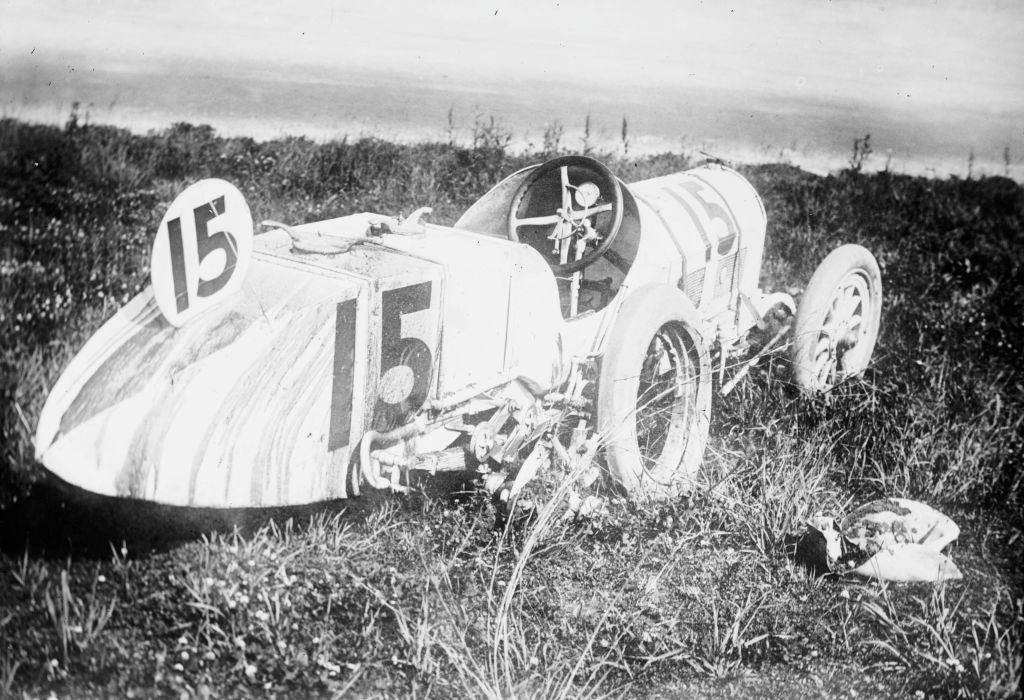
The first major weather disruption in Indy 500 history came in 1915. The race had been scheduled for Saturday, May 29, but heavy rain in the days leading up to it flooded the infield and left access roads in poor condition.
On the morning of Friday, May 28, Speedway officials announced that the race would be postponed until Monday, May 31. That made 1915 the first Indianapolis 500 to be fully moved off its original date because of weather. The delay was not just about the track itself. It was also about making sure fans could actually reach the Speedway safely.
Rain has never been just a side note in Indianapolis 500 history.
It has forced full postponements, cut classic races short, stretched events across multiple days, and changed the way winners were crowned.
In some years, like 1926, 1973, 1986, 2004, and 2007, weather became one of the defining storylines of the race itself.
That is part of what makes Indy unique.
The race may be built on engineering and preparation, but every May, the final word can still belong to the sky.